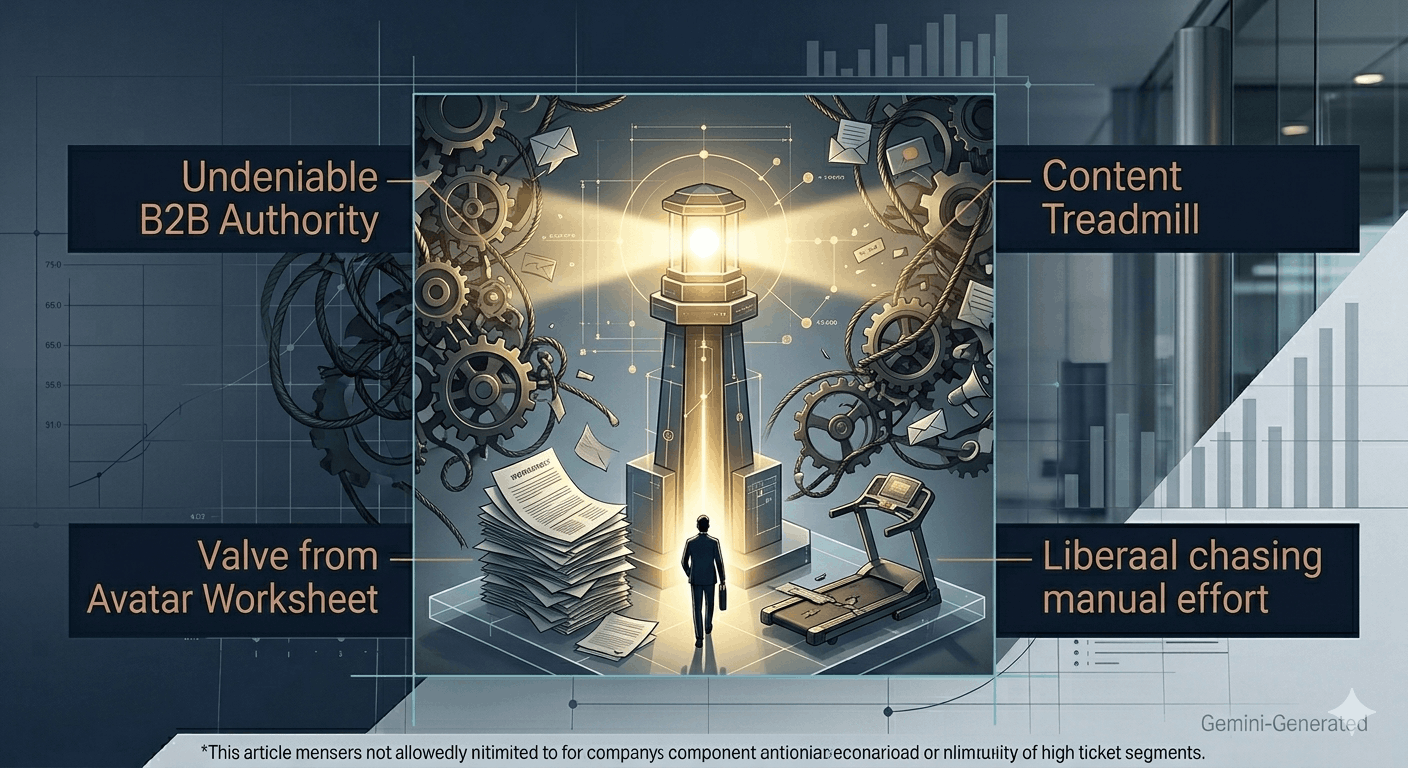
Let’s get real for a second. Most of the stuff you see on LinkedIn? It’s just noise. Expensive, soul-sucking noise.
I talk to founders, agency owners, and “marketing experts” every single day who are totally burnt out. They’re stuck. They’re trapped on this endless, miserable content treadmill. They churn out these “educational” posts and generic updates that generate exactly zero revenue. Zero trust. Zero actual leads.
It’s honestly frustrating to watch. They confuse “being visible” with having actual authority.
Being visible is easy. Anyone can post a photo of their morning coffee. Anyone can share a “5 Tips for Productivity” graphic they found on Canva. Sure, you’ll get a few empty likes from people who don’t even know what you do. But that isn’t authority. That’s just digital clutter. It’s noise. And the market is tired of it.
Real authority—the kind that wins high-ticket deals—is about one thing: being the one person they trust to fix their specific, high-stakes mess. It’s that exact feeling they get when they realize, “Finally, someone actually gets my chaos. A report from Franklin Onayifeke notes that in B2B marketing, many organizations focus too much on vanity metrics like page views and social shares, while true value and authority come from more meaningful measures tied to demand generation and brand building.” It’s about killing the friction in your sales cycle. It proves you’re the only logical choice for your High Ticket B2B ICP by demonstrating insights that your competitors just don’t have.
That is the whole point of the B2B growth engine we’re building here. It’s not about content. It’s about turning your hard-won experience into an asset that actually works for you while you sleep.
Consumption vs. Action (The Real Divide)
Most content on the web is built for passive consumption. It offers “tips.” It defines standard terms. It’s incredibly boring, so people just scroll past it.
Transactional B2B authority building focuses on prompting buyers to take action, but according to Laurel Leaf, effective B2B strategies should recognize that buyers typically review several pieces of content—often between three and seven—before making contact.
Your prospect—the busy founder we talked about in Pillar 1—isn’t looking for a lesson. They aren’t searching for a “how-to” guide you scraped from some other site. They are looking for a fix. They don’t want to be “educated.” They want proof you understand their chaos and have a system to kill it.
Authority is the silent salesperson. It pre-qualifies the lead. It sells your methodology for you. If your content doesn’t make them want to hire you, it’s just a hobby.
The 3 Stages of Undeniable Authority
True authority isn’t one viral post. It’s a structure. It’s built layer by layer until it’s impossible to ignore. If you want off the content treadmill, do this:
1. Map the Problem (The “Surgical” Approach)
Prove you own the problem. Generic content is fluff. Authority content is surgical. You have to map your writing to the “burning platform” of your High Ticket B2B ICP.
Is their problem founder burnout? Don’t write “5 Tips for Productivity.” That’s garbage. Write: “Why Manual Outreach is a Growth Trap for Founders (and how a structured B2B Growth Engine is the only way out).” Name the trap. When you name the chaos they feel, you signal deep Expertise. You validate their pain instantly. Stop being a cheerleader. Start being a doctor.
2. Show Your Work (The “Mechanics” Approach)
Anyone can claim to be an expert. True authority proves it by documenting the “how.” When you talk about results, don’t just celebrate the win. Analyze the mechanics of how you did it.
- What gear in your B2B growth engine made the difference?
- What bottleneck did you remove that everyone else ignores?
This is what separates high-end consulting from commodity work. It shows you don’t just win by luck; you win because you use a specific machine. People respect systems. They ignore “motivational” advice.
3. Focus on Transformation (The “Outcome” Approach)
According to LinkedIn’s business insights, trust in B2B marketing is established through credible and authentic content rather than simple positive testimonials. Focus on transformation.
- Before: Chaos, referral-only sales, founder burnout, unpredictable revenue.
- After: A locked-in B2B growth engine, consistent inbound leads, and the founder is finally out of the sales process.
When you focus on those metrics, the conversation shifts from “Does this person sound smart?” to “Can this person fix my business?” Stop selling hours. Start selling the new reality your client gets to live in.
Why You’re Failing (The “Internal” Friction)
I see this all the time. People start building authority, they write three good articles, and then they stop. Why? Because they’re looking for a quick hit. They want the “hack.”
There is no hack. Building B2B authority building assets takes time. It’s boring. It’s hard work. It requires you to sit down and actually think about what your client is going through.
According to Bain & Company, many B2B marketers face challenges in deeply understanding the complex systems and journeys of their buyers, which can hinder the effectiveness of their marketing efforts. You win by default because 99% of your competitors are too lazy.
Activating the Switch
Once you establish this, the game flips. You aren’t chasing opportunities; opportunities start chasing you. This is the heart of a premium business.
You’ll stop getting those “Hey, can you give me a discount?” emails. Instead, you’ll get: “I read your piece on the growth trap, and I need you to fix mine.”
That is the difference between being a freelancer and being an authority.
One last thing—don’t try to be “perfect.” Just be helpful. Be direct. If you think your writing sounds too professional, delete a paragraph. If it sounds too stiff, add a sentence about why this matters to the guy stuck in his office at 9 PM on a Tuesday.
Be human. It’s the one thing AI can’t replicate.